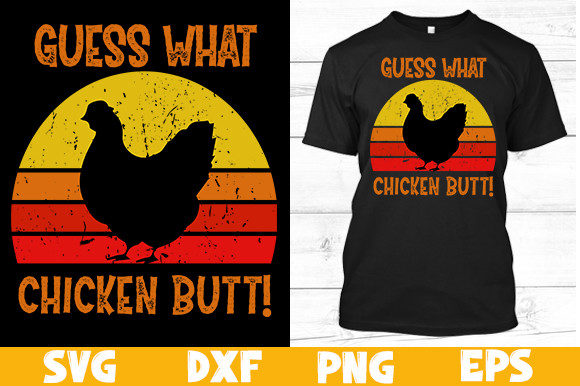
Guess What Chicken Butt T-Shirt Design Graphics & Print Templates
As a brand designer who has spent years crafting identities for local bakeries, boutique clothing stores, and artisanal food producers, I approach every new asset with a critical eye. Recently, I evaluated a specific graphic design asset titled Guess What Chicken Butt T-Shirt Design. At first glance, the name suggests a novelty item, but my review focuses on its potential utility within a broader commercial context. This piece is not merely a clipart image; it represents a distinct mood that can define a brand's personality if applied correctly.
The immediate impression of this design is one of unapologetic playfulness. It exudes a friendly, slightly irreverent energy that screams "fun" rather than "serious." For a small business owner looking to stand out in a crowded marketplace, this asset offers a unique opportunity to inject humor into their visual identity. However, humor is a double-edged sword. In the hands of an experienced creative, it builds emotional connection and memorability. For a luxury skincare line or a high-end law firm, this asset would be a mismatch. But for a handmade soap shop, a quirky coffee roaster, or a children's clothing boutique, the mood aligns perfectly with a brand that wants to feel accessible, approachable, and human.
Evaluating the Asset for Real Local Business Projects
In a recent project for a local bakery specializing in fun, retro-style donuts, we needed a visual element that could bridge the gap between our product and our customer's sense of humor. The Guess What Chicken Butt T-Shirt Design was considered as a potential decorative element. While the text itself might be too long for a primary logo, the graphical concept behind it serves as an excellent example of how playful graphics can enhance brand identity.
When integrating such assets into packaging design, the goal is always to create a cohesive narrative. Imagine this design adapted as a sticker on a jar of hot sauce or a hang tag on a line of organic pet treats. The asset works best when used as a hero graphic or a decorative accent that draws the eye without overwhelming the essential information. It supports a stronger first impression by breaking the monotony of standard typography. On social media graphics, this kind of illustration acts as a conversation starter, encouraging users to pause their scrolling and engage with the content.
Strategic Applications Across Product Lines
The versatility of modern digital products allows designers to repurpose assets across multiple touchpoints. This specific design file set typically includes various formats that are crucial for professional workflows. The ability to use these files for T-Shirts, mugs, hoodies, and other promotional materials means you can maintain consistency from your physical inventory to your marketing collateral.
- Product Labels: Use the design as a secondary seal or a border element on packaging to add character without obscuring ingredient lists.
- Promotional Banners: Leverage the bold nature of the illustration for website headers or sale flyers where attention is paramount.
- Social Media Campaigns: Create engaging posts for holidays or seasonal launches where a lighthearted tone is appropriate.
- Printable Inserts: Include custom thank-you cards or discount coupons inside packages that feature this playful motif.
By utilizing these design assets effectively, businesses can achieve better product recognition. When a customer sees the same playful style on a t-shirt, a mug, and a package, they begin to associate that visual language with the brand's values. This consistency builds trust and makes the brand feel more polished and professional.
Navigating Visual Hierarchy and Brand Tone
While the Guess What Chicken Butt T-Shirt Design is undeniably catchy, a seasoned designer knows that placement is everything. There are specific scenarios where this asset should be used with caution. If you are designing for a formal corporate environment, a medical supply company, or a minimalist luxury brand, this graphic will likely clash with your desired aesthetic. Similarly, using it in areas with low contrast or alongside dense legal text can compromise readability.
Visual hierarchy dictates that the most important information—such as the product name, weight, or price—must remain the focal point. A busy or humorous illustration can sometimes compete with this text, leading to confusion. Therefore, this asset is best reserved for decorative purposes, acting as a frame or a background element rather than the primary source of information. It should support the message, not drown it out.
For a handmade business selling candles or soaps, the asset could serve as a delightful "secret" detail—a small icon on the back of the label that delights the customer upon closer inspection. This creates a memorable experience that goes beyond the functional aspects of the product.
Technical Considerations for Commercial Success
Before committing to using any graphic design asset for a real-world application, technical due diligence is non-negotiable. The quality of the output directly impacts the perceived value of your brand. High-resolution files are essential for print work to ensure crisp edges and vibrant colors.
- File Format Versatility: Ensure you have access to vector formats like SVG or EPS. These allow you to scale the design up for a large banner or down for a tiny app icon without losing quality. Raster formats like PNG are vital for transparent backgrounds, allowing the design to sit cleanly over any color or texture.
- Color Testing: Always preview the design in black and white. Does it still hold its shape? Does it look good on dark backgrounds and light backgrounds? This step ensures the design remains effective regardless of the printing method or digital platform.
- Font Pairing: Test the graphic next to different typefaces. A playful illustration often pairs well with rounded sans-serif fonts or handwritten scripts, but it may clash with rigid serif fonts. Experimentation is key to finding the right balance.
- Licensing Verification: Most importantly, confirm the commercial license. Just because a file is available for download does not mean you can use it for mass-produced merchandise. Verify that you have the rights to sell products featuring this design.
Final Thoughts on Creative Integration
The Guess What Chicken Butt T-Shirt Design serves as a reminder that branding does not always have to be stiff or overly serious. For local businesses, marketers, and creative entrepreneurs, injecting personality into your visual strategy can be the difference between being just another option and becoming a favorite. Whether you are a boutique owner looking to refresh your hang tags or a food business needing a fun sticker for your jars, this asset offers a robust foundation for creative expression.
By treating this print template with the respect it deserves—testing it thoroughly, respecting visual hierarchy, and ensuring technical quality—you can transform a simple graphic into a powerful tool for small business branding. It is about more than just a funny image; it is about creating a cohesive, trustworthy, and engaging brand experience that resonates with your target audience. When used wisely, assets like this elevate your product mockup presentations and make your shelf appeal truly unforgettable.